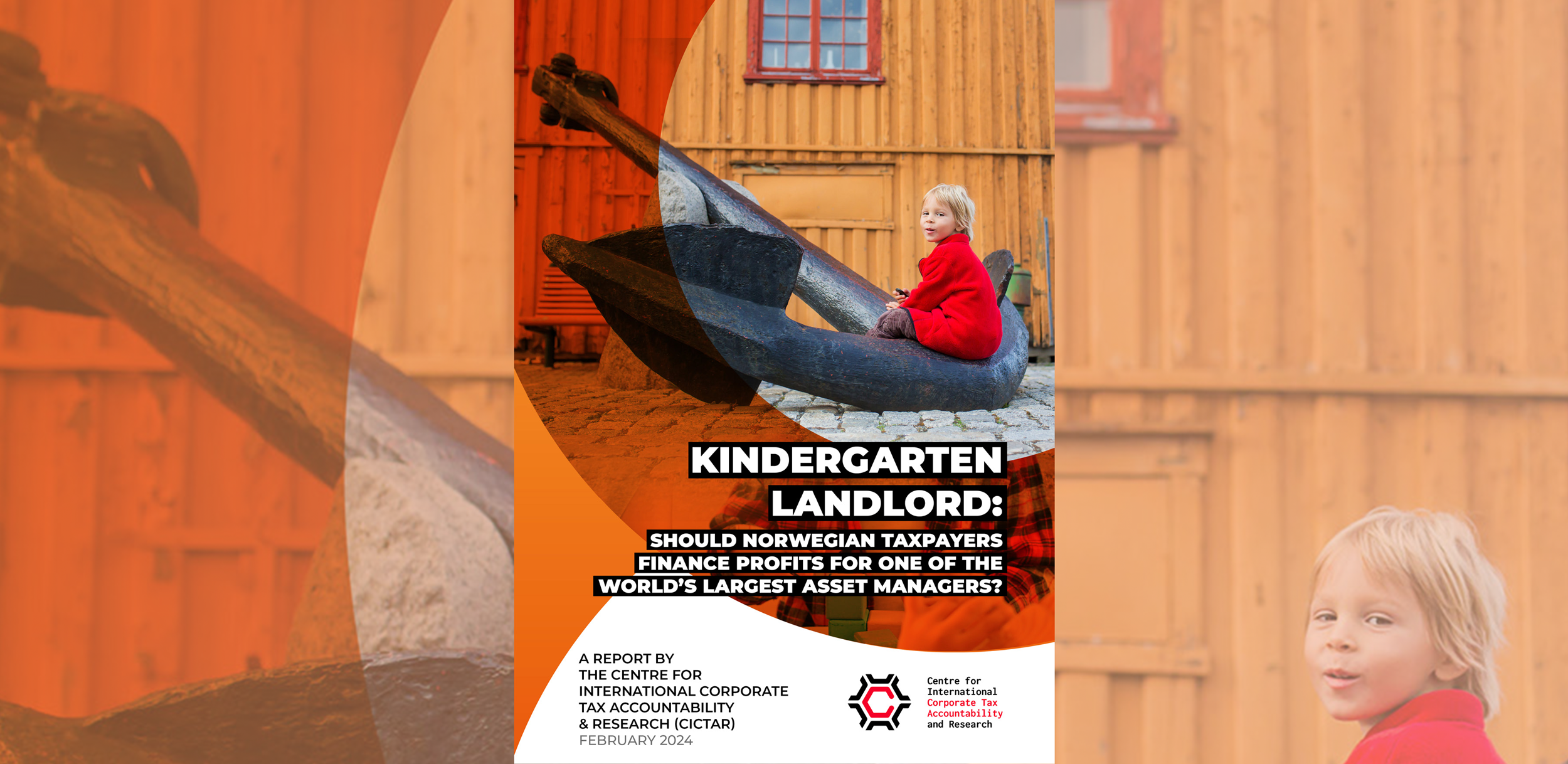
The report Kindergarten landlord: Should Norwegian taxpayers finance profits for one of the world’s largest asset managers? is written by the Centre for International Corporate Tax Accountability and Research (CICTAR) in collaboration with For velferdsstaten.
The CICTAR report reviews the property sales carried out by Norway’s two largest commercial kindergarten operators, Læringsverkstedet and Trygge Barnehager. The companies sold 138 and 142 properties respectively in 2020 and 2021 to the Swedish company SBB. SBB then sold the properties on to one of the world’s largest real‑estate and investment companies: the Canadian firm Brookfield. Brookfield now owns over 300 kindergarten properties in Norway. This figure also includes properties in the kindergarten chain Espira.
Across Europe and globally, the financialization of welfare services is increasing. Welfare companies that operate publicly funded services may today be owned by all types of financial actors, such as private equity (PE), hedge funds, pension funds, and banks. These companies use various financial strategies, including taking on debt and moving money between entities, and they are often registered in, or operate through, tax havens.
CICTAR has investigated Brookfield’s investments in other countries and has extensive knowledge of their tax‑avoidance strategies. The conclusion is that there is a high probability that public funding allocated to kindergartens in Norway —channeled through rent payments to Brookfield— will end up in tax havens. This leakage comes in addition to the fact that kindergartens now face significantly higher rental costs than before the property sales, and compared with other private kindergartens.
Norway has one of the most comprehensive welfare states in the world, supported by both taxation and regulation. This is especially true in the kindergarten sector, where all children have a statutory right to a place from the age of one, and families pay only a small share of the cost through parental fees. Full kindergarten coverage was achieved by significantly increasing the number of kindergartens, and private operators were invited into this expansion with highly favorable financial arrangements. The Norwegian state invests billions of Norwegian kroner annually to deliver high‑quality public services. Around two percent of Norway’s GDP goes to kindergartens alone. With the kindergarten operators’ property sales, we see an increased risk that a significant share of this public investment ends up as profit for Norwegian and foreign owners.
CICTAR was founded by a group of trade unions and civil‑society organizations who believe that workers and their communities need more and better information about the tax practices of multinational corporations. They work to document the growing financialization of publicly funded welfare services such as health, care, and education.